Creative time you can pause: one card, one clear next step
Make a small paper card with a clear stopping point, a cleanup plan, and a reusable restart note. Includes a fictional family example.
By Ashley Kays for CreativeMama · First published October 8, 2026 · Updated October 29, 2026
Make one small thing, decide where you can stop, and leave yourself a specific next action. You do not need an uninterrupted afternoon. Start with a three-shape paper card, then put it away without turning the dining table into a permanent craft installation.
This is an original suggested activity, not a report of a tested family session. Times are planning estimates. Adapt them to your materials, space, supervision needs, and energy. Finishing is optional; being able to stop is the useful part.
Choose a small finish line
Instead of “make holiday cards,” try “arrange three paper shapes on one folded card.” A greeting, border, or envelope can wait for another session.
- About five minutes: fold the card and choose three colors. Store the pieces together.
- About fifteen minutes: arrange and attach the shapes, then allow the drying time on the adhesive label.
- More time, if wanted: add a note or a drawn border. One card does not need to become twelve matching cards.
A timer is a reminder to check in, not a demand to rush. Stop sooner if someone needs care, materials are unsuitable, or the activity is no longer enjoyable.
Set out one small kit
Gather one sheet of paper or cardstock, three colored paper pieces, a pencil or crayon, and a small amount of age-appropriate paper adhesive in its labelled container. Add a washable work surface, a scrap container, and a folder or tray for unfinished work. Tear the paper rather than cutting it. This version needs no blade, hot glue, glitter, beads, or extra shopping.
If a child joins: choose supplies intended for their age and use, follow the labels, and supervise directly. If they still mouth paper or materials, skip the loose-piece collage and choose an activity you can supervise appropriately. Do not try to complete your own project when your attention is needed elsewhere.
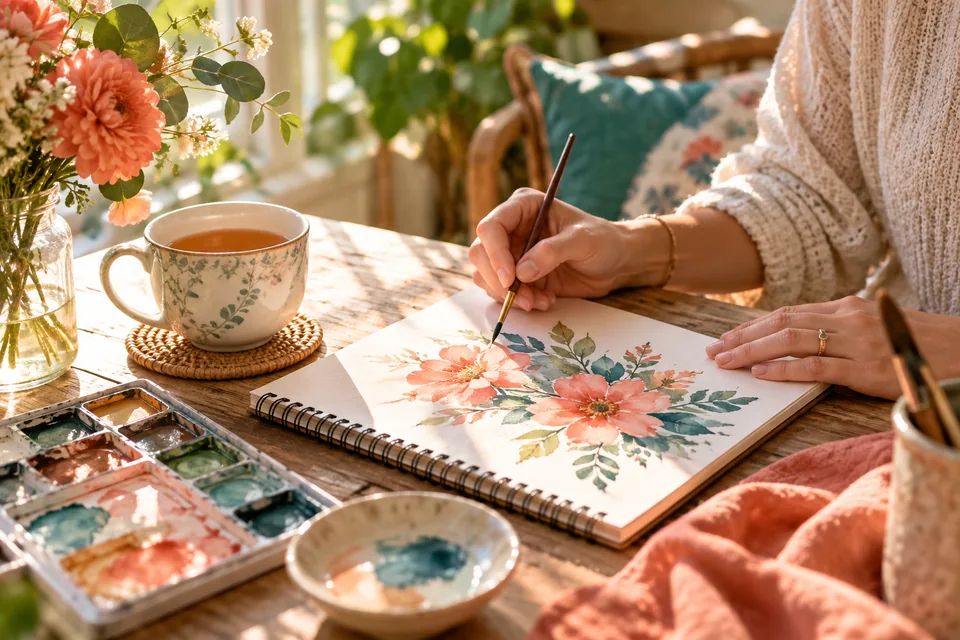
The U.S. Consumer Product Safety Commission advises using children's art materials as intended, keeping food and drink away from the art area, and storing surplus materials away from children. “Non-toxic” does not mean edible. Health Canada also recommends age-appropriate labelled supplies and close supervision. Clean up and wash hands afterward. The cover is visual inspiration, not a safety setup to copy: keep your tea away from craft supplies.
Make a three-shape card
- Fold the sheet in half and choose the front. A flat postcard is fine if you prefer.
- Tear three shapes from the colored pieces: strips, rough circles, or abstract blobs. Matching edges are unnecessary.
- Lay the shapes on the front without adhesive. Try a row, a stack, or one large shape with two small companions.
- Attach the pieces following the adhesive directions and drying time. If stopping before this step, store the loose pieces together out of children's reach.
- When dry, add a sentence if you want: “This made me think of you.” Keep it, give it privately, or decide later.
For a simpler alternative, draw three colored shapes directly on the card and skip the loose paper and glue. Prefer an adult watercolor session like the cover? Use your familiar supplies, allow safe drying space, and use the same restart note. These are alternatives, not extra requirements.
At a shared table, everyone can make something different. Let each person choose what to keep, give, or change. Participation does not mean agreeing to make a gift or a photo for social media.
Pause without losing your place
Allow roughly five minutes for a reset; some materials need longer. Secure supplies, move the project to a suitable place inaccessible to young children and pets, clear scraps, clean the surface, and wash hands. Follow the actual product instructions for drying, storage, and cleanup.
Write an action rather than an ambition: “When dry, write one sentence inside” is more useful than “finish card.” If stopping at the layout stage, sketch the arrangement in your note. Dry paper can wait in a folder; wet work needs appropriate drying space, not a sealed stack.
If you cannot leave the materials safely, choose the drawing-only version or postpone the activity. An available table is not the same as an available adult.
A fictional interrupted afternoon
Sam plans one card while an older child draws on a separate sheet nearby, using suitable labelled supplies with Sam supervising. Sam's finish line is “three pieces arranged,” not “a finished gift.” After eight minutes, the household needs to leave.
Nothing has been glued. Sam stores the pieces in a folder out of reach, puts the materials away, and writes: “Try the yellow strip below the blue circle, then decide whether to glue.” The child keeps their drawing unfinished. No one has failed the afternoon.
Sam may return later, change the layout, or reuse the paper. These people and outcomes are invented to explain the method, not a customer story, developmental claim, or promise about a child's response.
Copy the pause-and-resume card
Copy this into a note or write it on scrap paper. Keep family details in your own records; nothing needs to be uploaded.
For a print-friendly page, open the existing holiday project planner. Use its supplies and preparation fields for this smaller project; leave unrelated fields blank.
Make the next session easy
Store one project's materials together rather than opening every supply box. Use the small creative-corner guide to choose a practical home for them. To keep a story instead of making another object, try the little-moments memory routine.
The free Little Moments Kit is another ready-to-use resource, available without an email. Its page also offers optional CreativeMama email signup when available; subscribing is separate from downloading. No purchase is needed for this activity.
Final check: can you find the project, understand the next action, and leave the room usable? The card does not need to be perfect, public, profitable, or finished today.