LITTLE MOMENTS OF CONNECTION
Helping your toddler feel included when a new baby arrives
Small rituals, useful phrases, and optional helper jobs for a toddler adjusting to a new sibling.
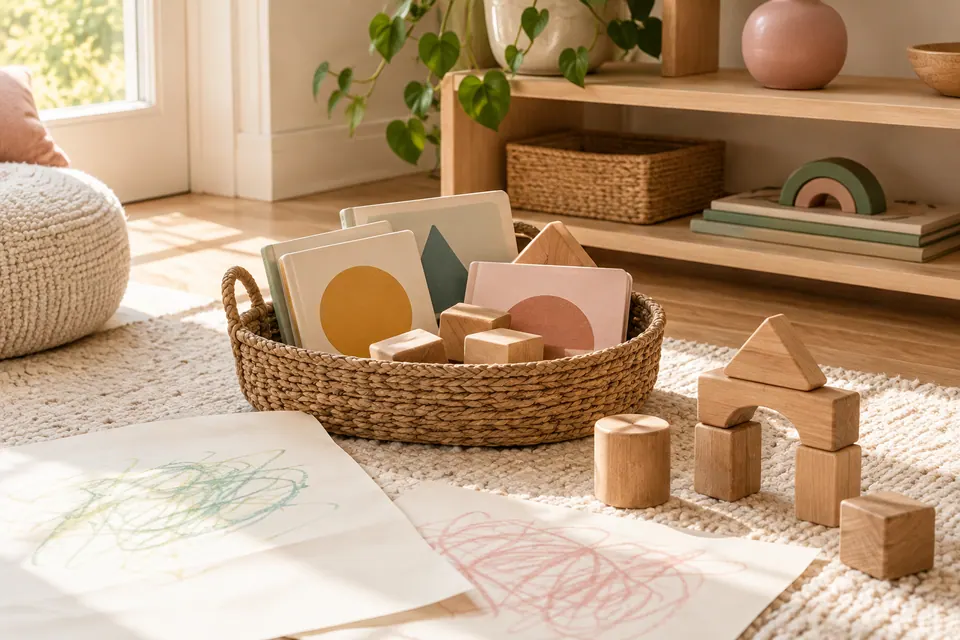
Keep a few familiar routines, make room for your toddler’s feelings, and offer brief moments of individual attention. Being the older child does not mean they suddenly need you less.
Keep one small ritual recognizable
Choose something you can usually repeat: one breakfast song, a book after lunch, or looking out of the window together. Keep the promise small enough to survive a busy day.
You do not need equal minutes for each child in every hour. Try noticing the toddler out loud: “You brought your favorite book. I want to see the page you chose.” It gives the moment a clear beginning even when it is brief.

Make feelings easier to name
Say “You wanted me to pick you up” or “It is hard to wait.” You can acknowledge the feeling while keeping a boundary. “I won’t let you hit. I will help you move back.” Stay close enough to intervene.
The AAP notes that children may act younger or seek extra reassurance after a sibling arrives. Respond to the need for connection rather than treating it as a contest with the baby. Ask your pediatrician if behavior concerns persist or you need individualized guidance.
Invite help without assigning care
Offer a choice between two adult-approved books or ask your toddler to point to the clean outfit they like. They can watch you do baby care or choose to play elsewhere within supervision.
An adult remains responsible for feeding, lifting, carrying, and supervising the infant. Do not leave a toddler alone with a baby. Praise a specific gentle action without calling the child your helper every time they enter the room.
Use phrases that do not blame the baby
Instead of “We cannot because of the baby,” try “We can do the short version today.” Instead of “You are the big one,” try “You still get cuddles, too.” The goal is clarity, not never saying something imperfect.
When you miss a promised moment, acknowledge it: “We did not get our book time. Let’s choose one now.” Repair can be a small action. You do not need a gift to make every disappointment go away.
Give visitors a useful role
Before a visit, ask someone to read or play with the toddler while you remain available to your infant. Suggest that visitors greet the toddler by name and ask about something they enjoy.
Keep visits a manageable length. It is fine to ask for a meal drop-off instead of a long social event. Protecting the family’s energy leaves more room for connection after the door closes.

A question you might have
What if my toddler does not want to help with the baby?
That is okay. Offer connection through the toddler’s own interests and keep baby-care invitations optional. The relationship can develop gradually.
USE WHAT YOU HAVE FIRST
Useful things for this plan
Product ideas to compare, with a job for each one. These are editorial selections, not hands-on reviews or a promise about a particular seller.
As an Amazon Associate I earn from qualifying purchases. Amazon buttons are paid links to searches, so you can compare current listings. How our shopping links work.
Baby & toddler
New-baby sibling board books
A shared reading ritual that gives a toddler words for the new person in the family.
Compare on Amazon ↗ (paid link)Baby & toddler
Two-color packing pouches
One pouch per child makes it easier for another caregiver to find the right outfit or diaper size.
Compare on Amazon ↗ (paid link)A little more support
START HERE
Two under two: a rhythm for the days that do not go to plan
Practical ways to care for an infant and toddler, share the workload, and define success more kindly.
Read the guide →
A CALMER FEEDING CORNER
What can your toddler do while you feed the baby?
A simple setup for connection, supervision, and realistic toddler play during baby feeds.
Read the guide →