START HERE
Two under two: a rhythm for the days that do not go to plan
Practical ways to care for an infant and toddler, share the workload, and define success more kindly.

With two under two, build the day around a few reliable anchors rather than a perfect timetable: basic care, simple meals, a toddler connection moment, and a clear handoff when help is available.
Start with a minimum-day plan
Write down what truly needs to happen today: both children cared for, food for the adults, essential appointments or medicines as prescribed, and the next opportunity for rest. Put crafts, errands, and a perfect kitchen in the optional column.
Keep a ready meal or easy pantry option for difficult afternoons. A minimum day is a deliberate plan that protects your energy. You can expand it when you have capacity without treating the simpler version as failure.
Use anchors instead of clockwork
Try a morning reset after the first care tasks, a familiar toddler lunch routine, a quiet afternoon option, and an evening supply check. Let infant feeding and sleep needs guide the space between those anchors; follow your baby’s clinician’s advice rather than imposing a schedule from an article.
Write a short “next up” list where another adult can see it. Record what actually matters for the handoff, such as when baby last fed, where supplies are, and what the toddler is expecting next.
When both children need you
First address immediate safety. Put baby in a safe place when you need both hands and bring the toddler close enough to supervise. Say what is happening in a calm, short sentence: “I hear you. I am helping you both. First this diaper, then your book.”
If you feel yourself reaching a breaking point, put the children in appropriate safe places and call a trusted adult for help. Persistent distress, exhaustion that makes care unsafe, or concerns about your own health deserve support from your healthcare team.

Give your toddler a place in the new rhythm
The American Academy of Pediatrics recommends protecting some individual attention and inviting an older child to help in manageable ways. A toddler might choose the book you read together or bring a clean cloth while you supervise.
Keep the invitation optional. Avoid making your toddler responsible for the baby or requiring kisses, cuddles, or a cheerful reaction. A little disappointment can coexist with a growing relationship.
Share ownership, not just instructions
Instead of “help more,” try “Can you own dinner and kitchen cleanup on these evenings?” or “Can you take our toddler to the park Saturday and handle the packing?” A full task includes noticing, preparing, doing, and putting away.
For a solo caregiver, make the help request similarly specific: a grocery pickup, one hour of company during dinner, or a regular check-in. Put the request in words someone can act on. Small reliable help can be more useful than a vague promise.
A five-minute evening reset
Restock only the supplies needed for the next stretch, set out toddler breakfast basics, and identify tomorrow’s one must-do. Name one thing that went well, however ordinary. Then stop resetting.
For infant sleep, use an appropriate firm, flat sleep surface with a fitted sheet and place baby on their back. Keep pillows, loose blankets, positioners, and weighted products out. Consult the linked CPSC guidance when choosing a sleep product.
A question you might have
Does “two under two” mean two children born within two years?
Here it means caring for two children who are both younger than two, usually an infant and a toddler. The practical planning ideas can also help with a wider age gap.
USE WHAT YOU HAVE FIRST
Useful things for this plan
Product ideas to compare, with a job for each one. These are editorial selections, not hands-on reviews or a promise about a particular seller.
As an Amazon Associate I earn from qualifying purchases. Amazon buttons are paid links to searches, so you can compare current listings. How our shopping links work.
Baby & toddler
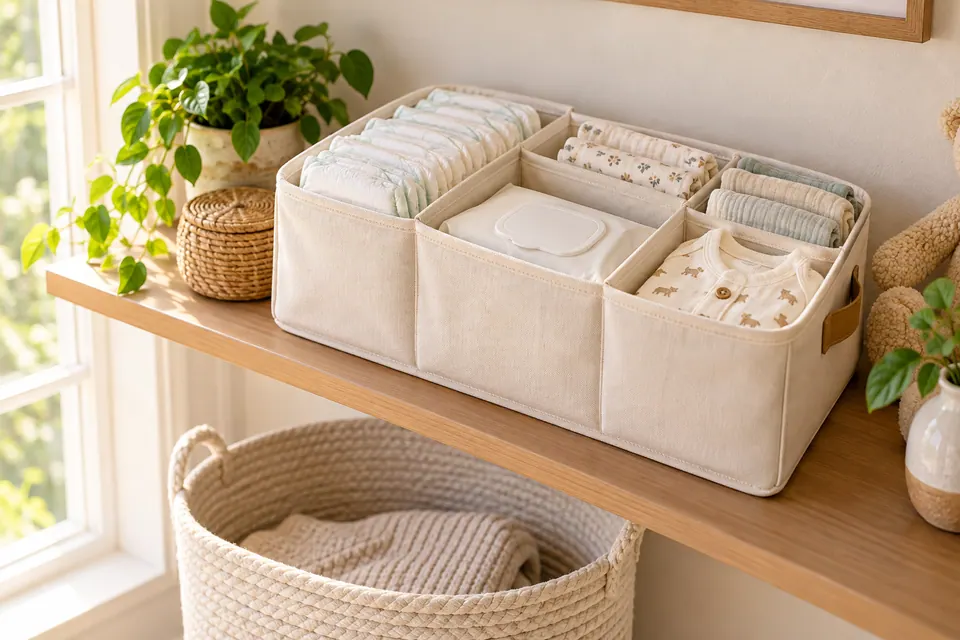
Portable diaper caddy
Keep the next diaper, wipes, and a spare outfit together near your usual changing spot.
Compare on Amazon ↗ (paid link)Baby & toddler
Machine-washable burp cloths
Small cloth stacks beside feeding and changing spots can reduce trips across the house.
Compare on Amazon ↗ (paid link)Baby & toddler
New-baby sibling board books
A shared reading ritual that gives a toddler words for the new person in the family.
Compare on Amazon ↗ (paid link)A little more support
A CALMER FEEDING CORNER
What can your toddler do while you feed the baby?
A simple setup for connection, supervision, and realistic toddler play during baby feeds.
Read the guide →
LITTLE MOMENTS OF CONNECTION
Helping your toddler feel included when a new baby arrives
Small rituals, useful phrases, and optional helper jobs for a toddler adjusting to a new sibling.
Read the guide →